Recorded Waves and Washed-Up Kelp: What January’s Santa Ana Wind Storm Left Behind
On January 8-9, 2026, a strong Santa Ana wind event roared through Southern California, bringing fierce offshore winds and rough seas that shut down passenger vessels and littered our shores. At Catalina Island Marine Institute, we found piles of kelp and algae washed up on the beach and the impact was visible everywhere you looked. But behind these dramatic scenes, our Spotter Wave Buoy recorded something remarkable—the largest waves measured since installation in May 2025—a 4.0-foot maximum wave height, with a 5.1-second period from an east-northeast (64°) direction. This one data point tells a deeper story about how wind, waves, and kelp forests interact in dynamic coastal systems.
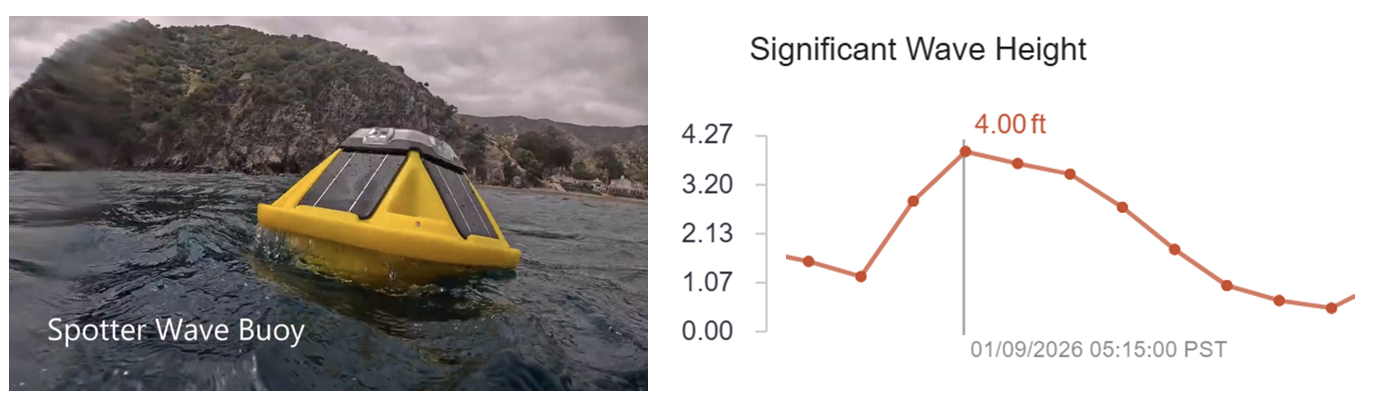
Left: the Spotter Wave Buoy in front of Toyon Bay. Right: Peak wave measurement during the wind storm.
Waves are the ocean’s fingerprints of a storm.
As wind blows over the ocean, it passes energy into the water. The height, spacing, and direction of the resulting waves record how strong the wind was and how long it persisted. In this case, sustained Santa Ana winds drove persistent wind waves toward Catalina’s northeast-facing beaches, pushing enough energy to cancel boating schedules and wash seaweed onto the shore. Without the buoy’s continuous record, we’d rely solely on anecdotal stories to describe this event. Instead, we can quantify it, compare it to past periods, and begin to link specific ocean conditions with kelp forest responses—a major goal of our long-term monitoring program.
At first glance, scenes of algae and kelp littering the beach might look like devastation. But storms like this play a complex ecological role in nearshore ecosystems. As discussed in our earlier blog on storms and kelp forest dynamics, powerful wave action can clear invasive algae such as Sargassum horneri and dense understory algae that compete with kelp for space. It can overturn cobbles and boulders, opening up fresh substrate for kelp spores to settle and grow. Storm-induced mixing also brings cooler, nutrient-rich water up from depth, creating favorable conditions for kelp growth once the surf calms.
This doesn’t mean all storms are purely beneficial—very intense, prolonged, or frequent disturbances can hamper kelp recovery and alter bottom communities. Broader ecological studies show that recurrent storm disturbances can reduce canopy biomass and shift species balance over time. But when viewed through a long-term lens, storm events contribute to the natural disturbance regime that shapes resilient kelp forests.
Here’s where the Spotter buoy shines.
By capturing high-resolution data throughout storm cycles—before, during, and after events like January 8-9, we’re not just documenting wave anomalies, we’re building the time series needed to understand how kelp forests respond to real storm events. Over years, these measurements will help researchers, teachers, students, and community members better connect ocean physics with ecological outcomes. That’s the power of having real, continuous ocean data right off Catalina Island Marine Institute’s coast, turning dramatic weather into meaningful science.
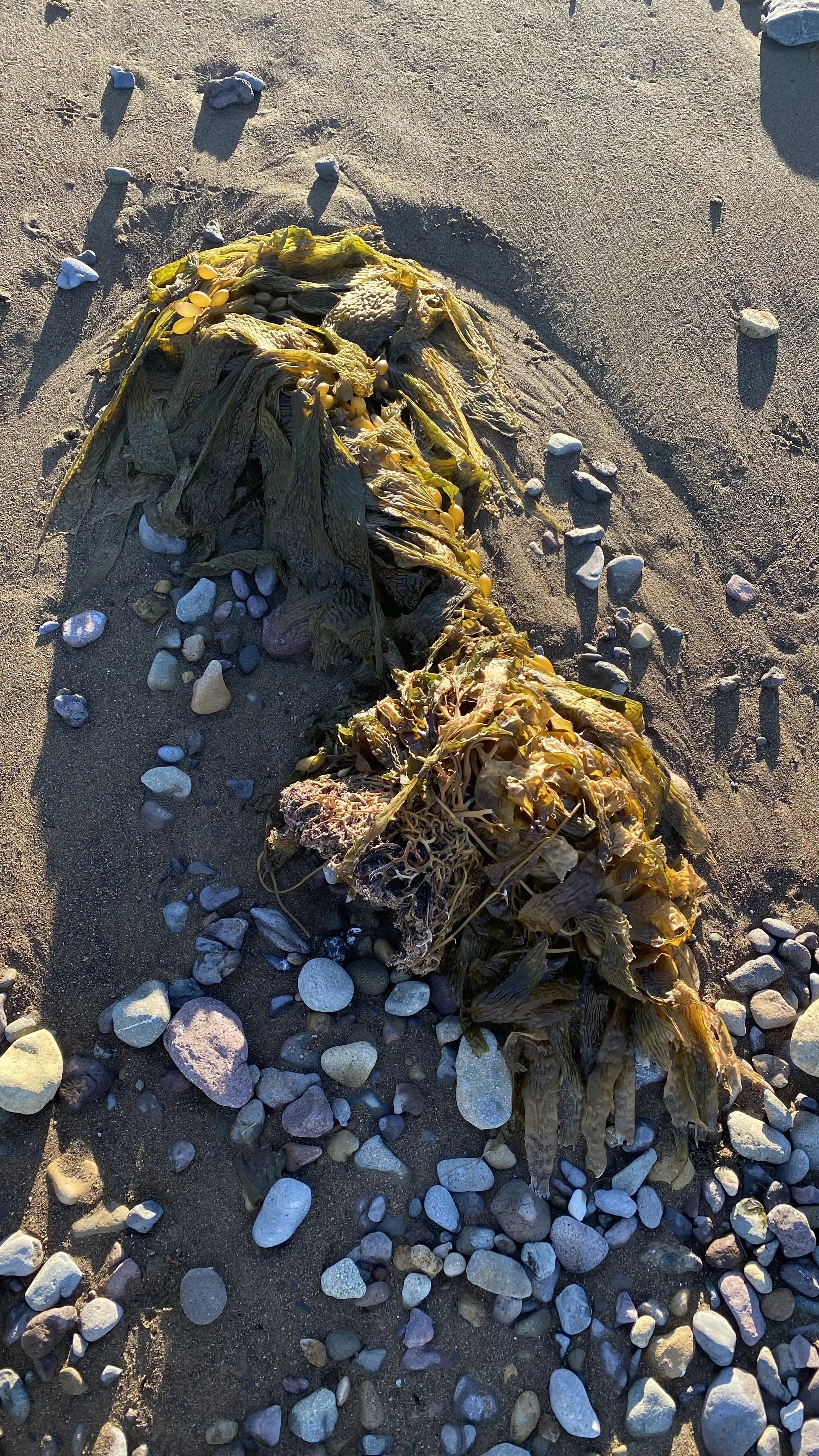
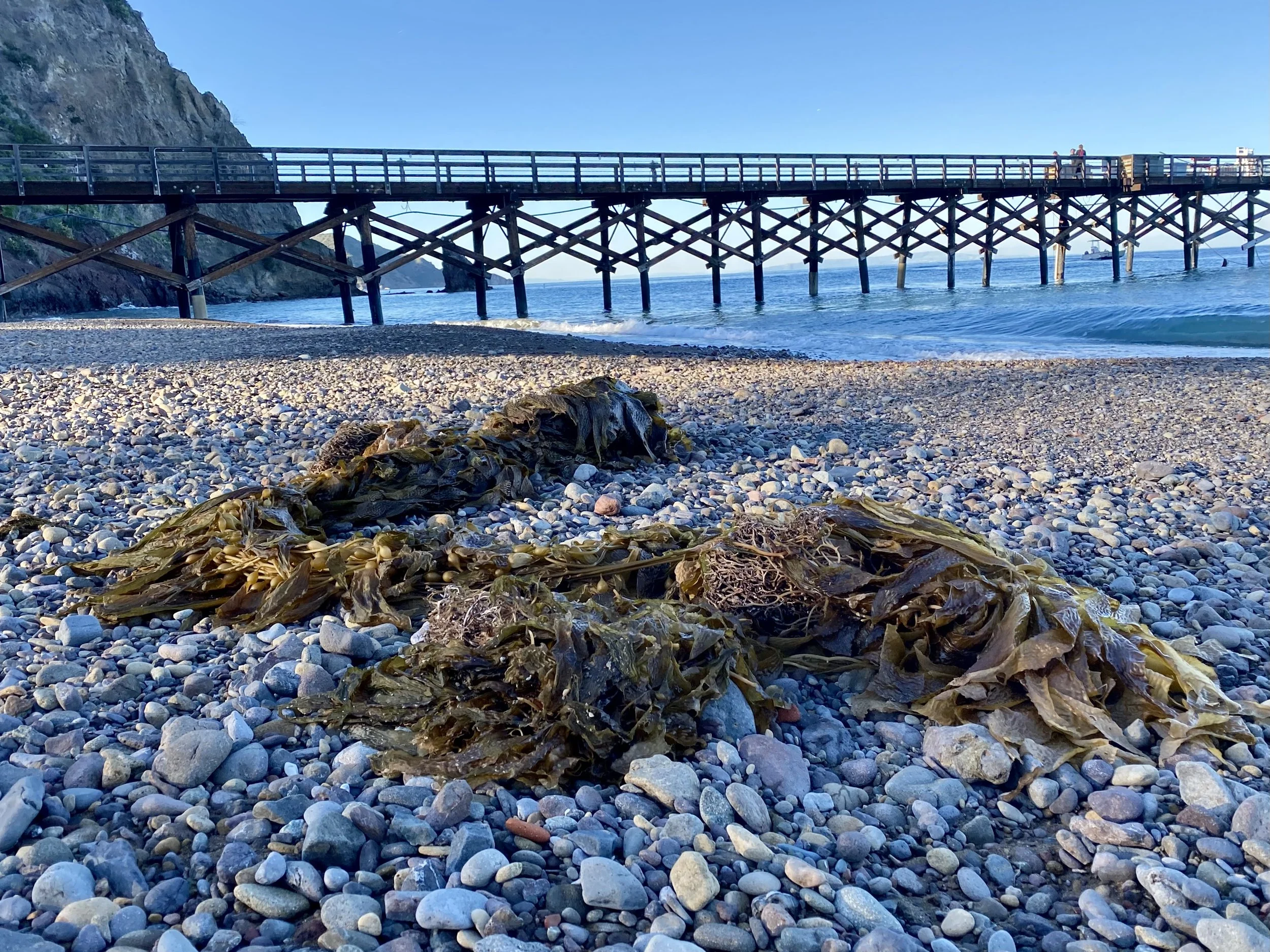
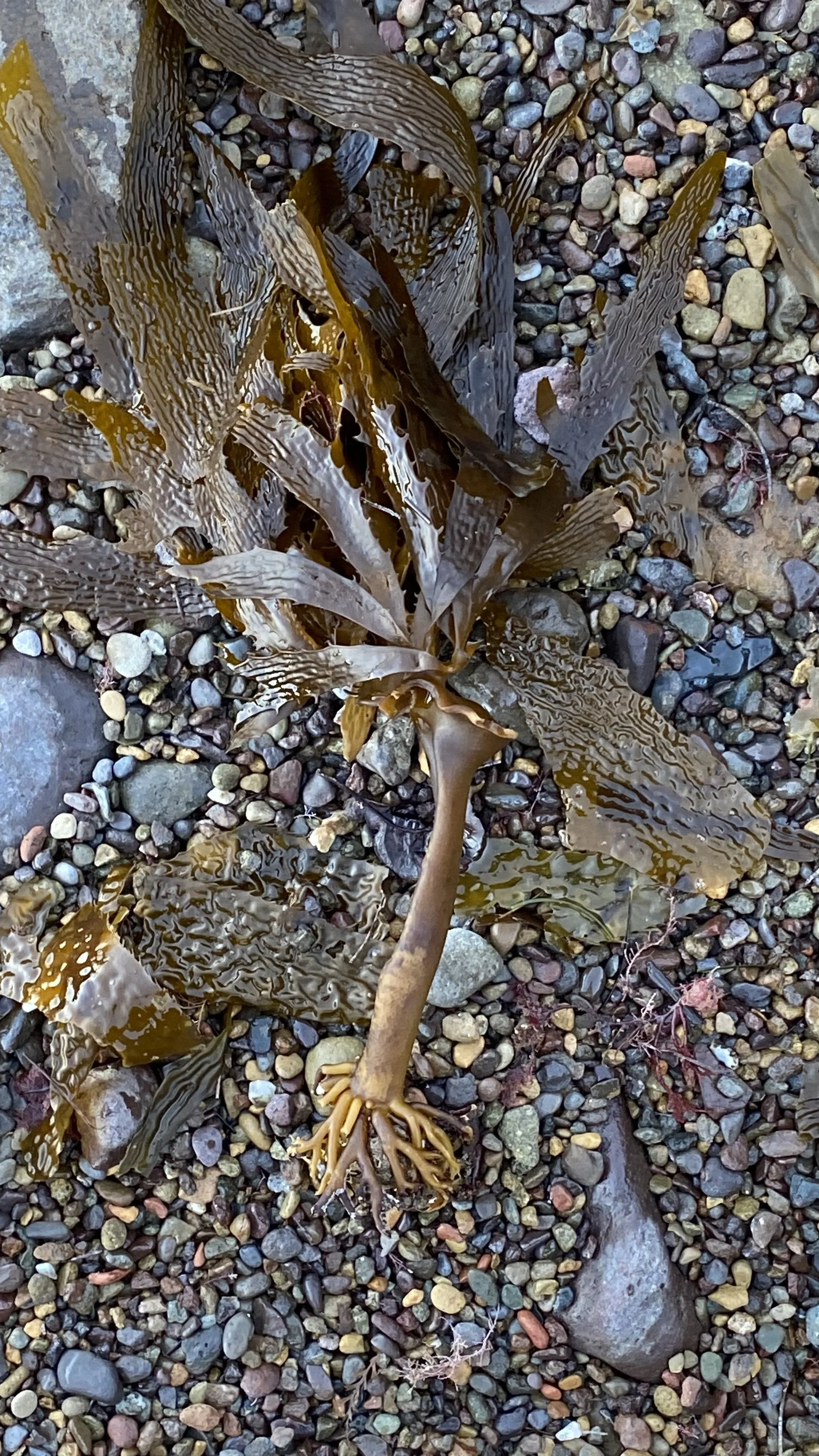
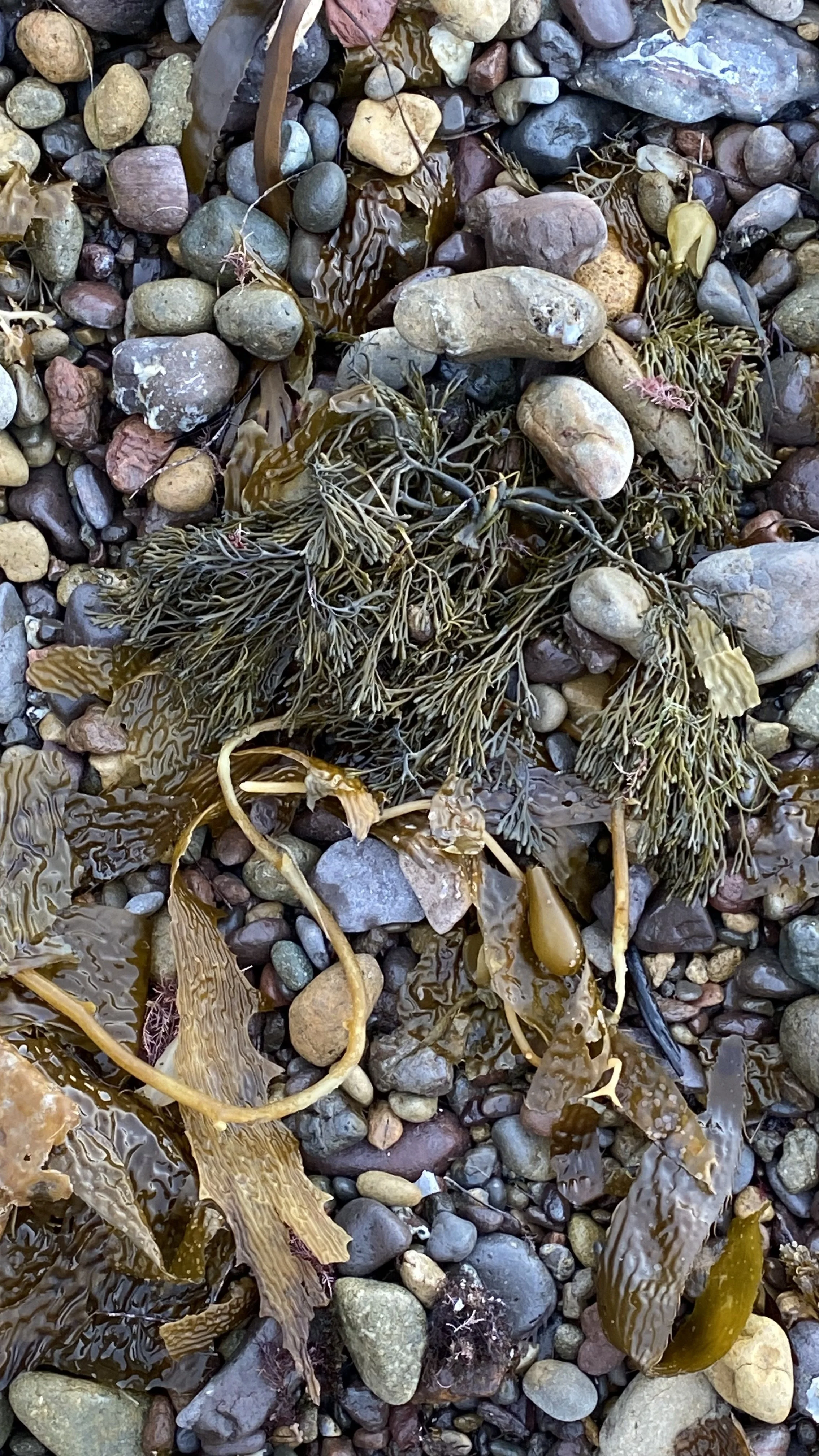
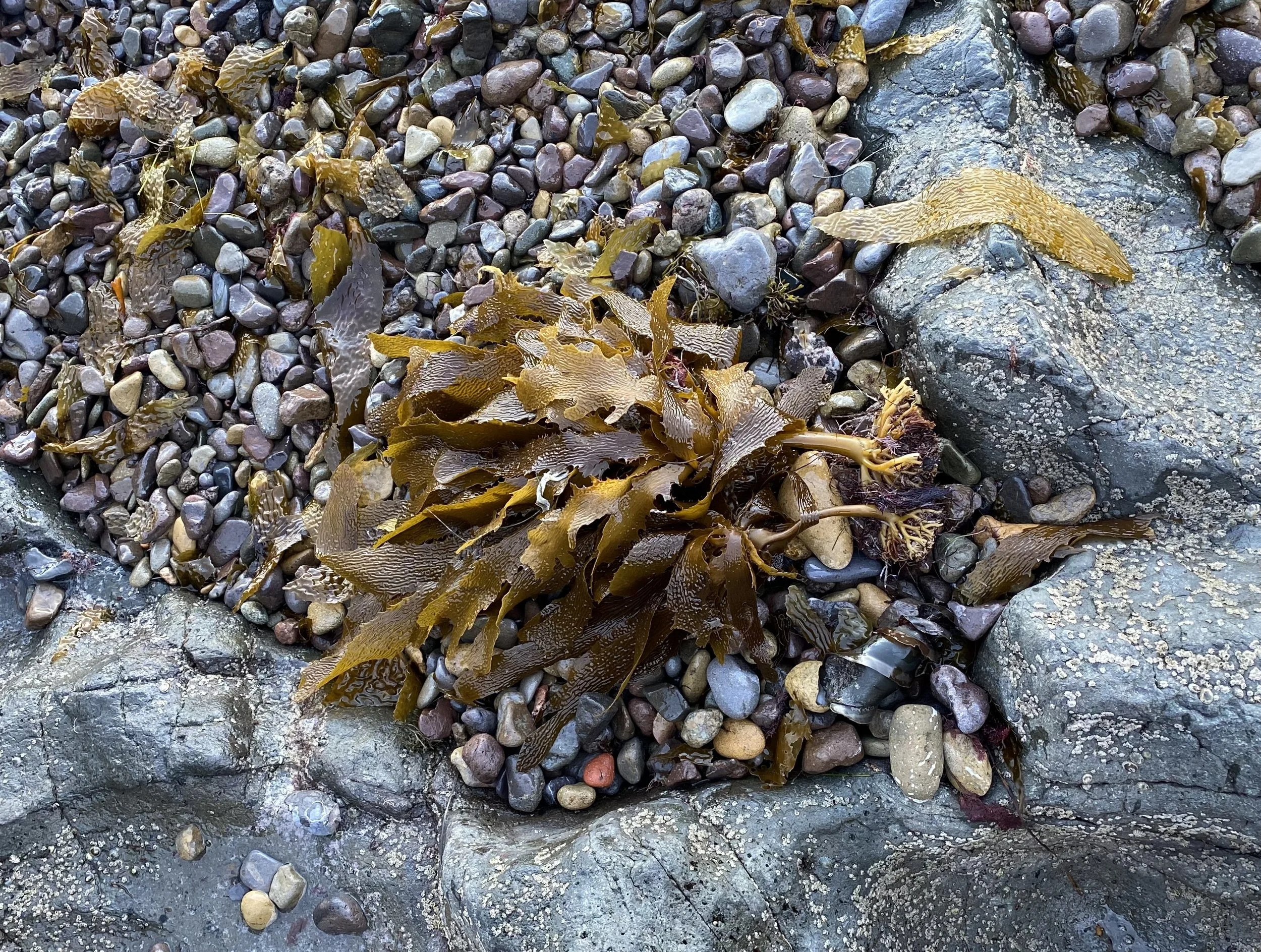
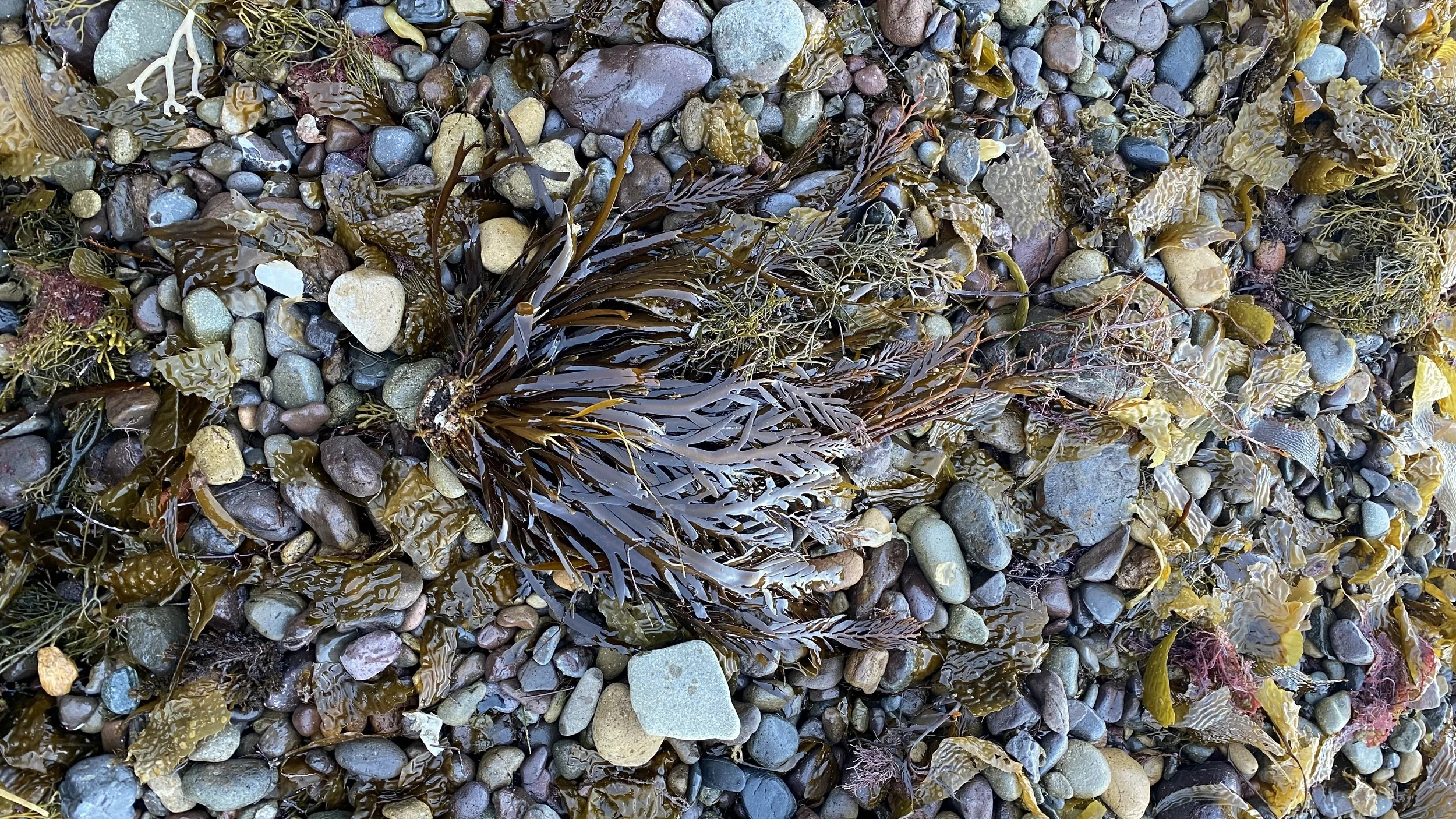
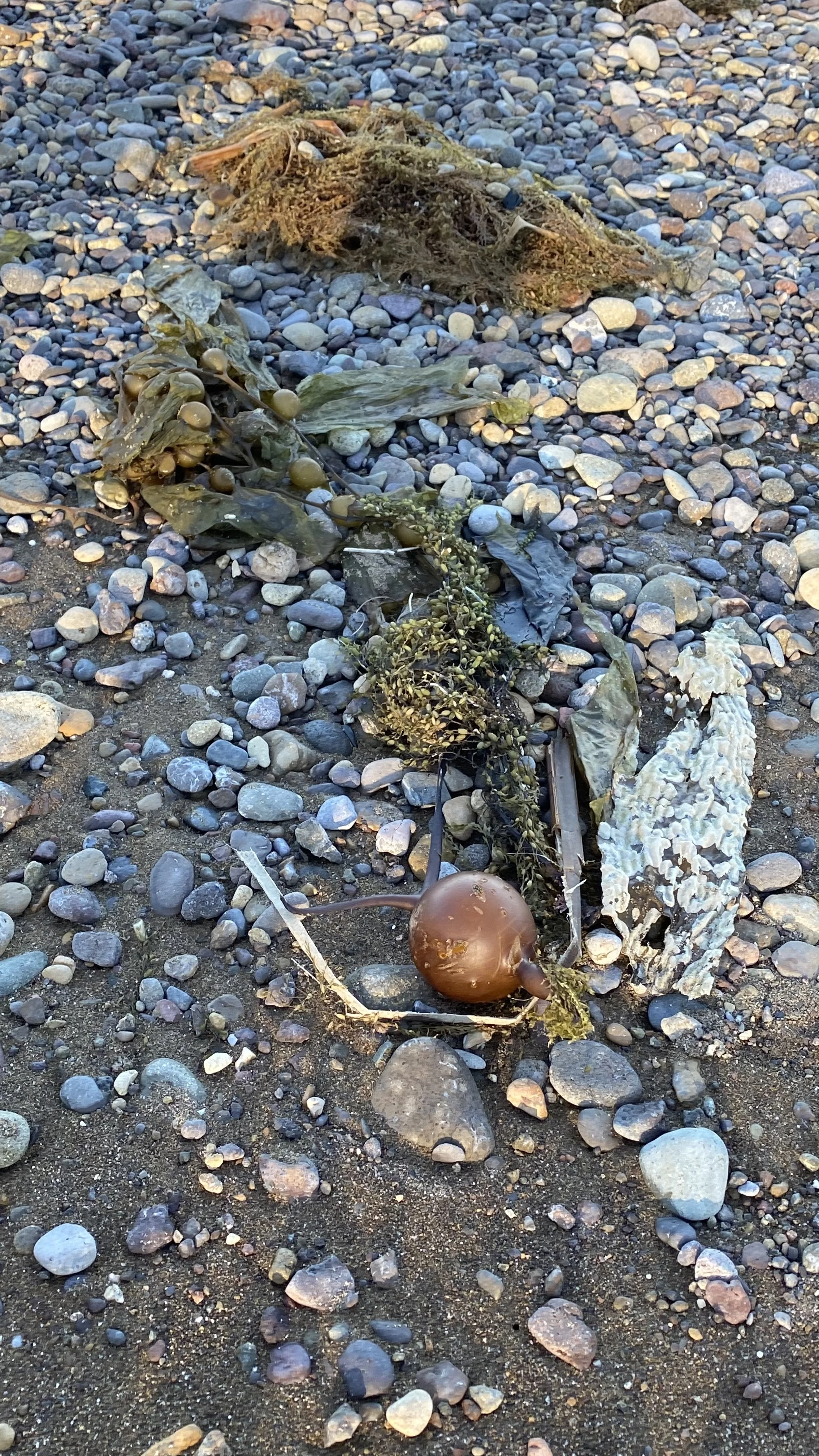
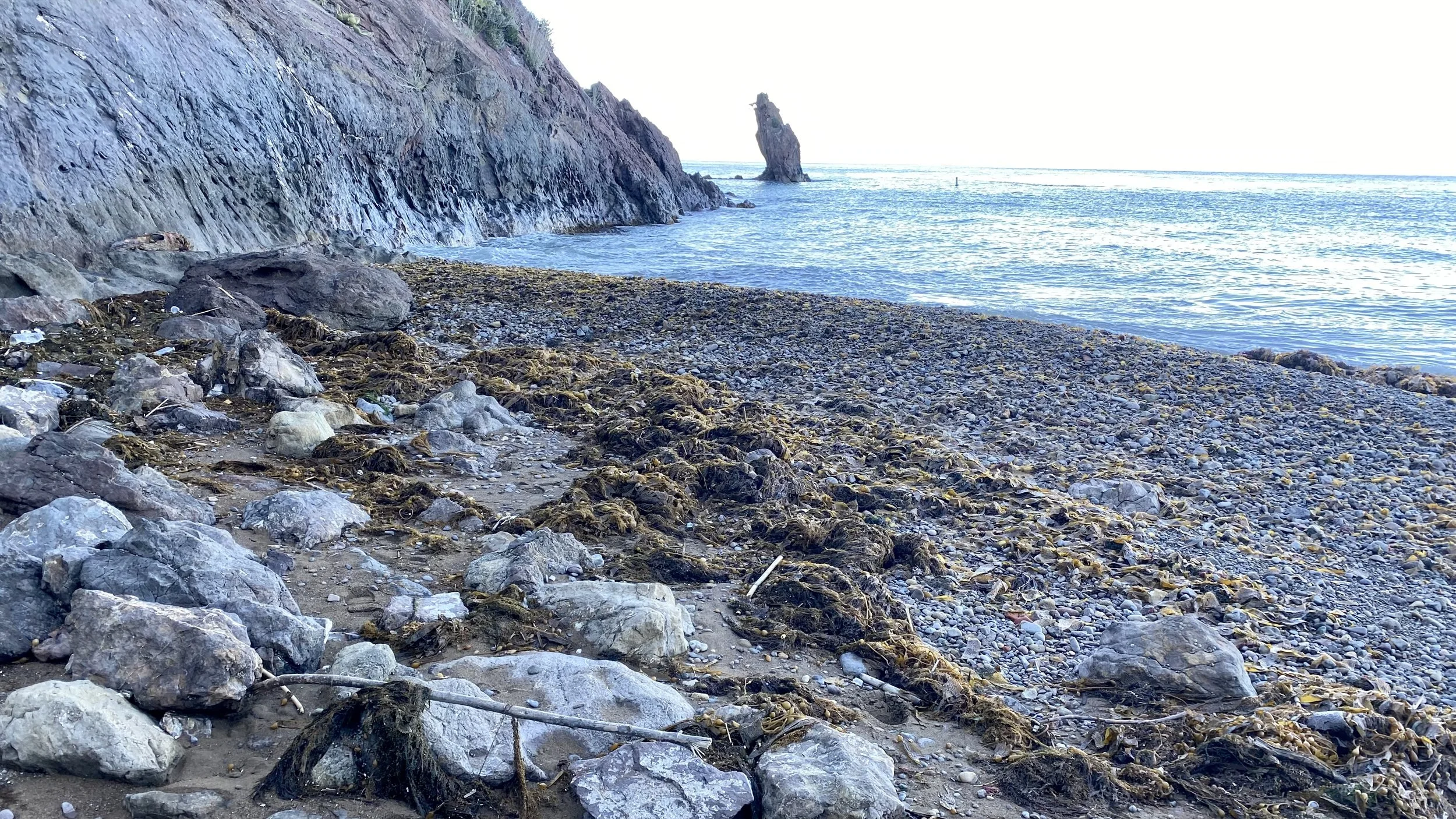
Beach Wrack: Is it litter? Is it food? Is it a work of art?
While piles of kelp and other algae washed up on the beach may look messy at first glance, this beach wrack plays an important ecological role. Wrack provides food and shelter for a wide range of invertebrates—such as amphipods, isopods, and flies—that form the base of sandy beach food webs. These small organisms, in turn, support shorebirds and coastal fish. As kelp and algae break down, nutrients are slowly released back into the coastal system, helping fuel nearshore productivity. Beach wrack also helps trap sand and reduce erosion, linking offshore kelp forests to the health and stability of the shoreline. In this way, storm-delivered wrack is not waste, but a visible reminder of the tight ecological connection between kelp forests and coastal beaches.
Test your knowledge of Beach Wrack Algae!
In the 8 photos above can you identify (a) giant kelp, (b) elk kelp gas bladder, (c) southern sea palm, (d) Stephanocystis osmundacea, (e) intertidal rock weed, (f) Toyon Pinnacle, (g) invasive Sargassum horneri, and (h) a horn shark egg case - Hint - it is in the 5th photo.