Goals & Objectives
Understanding Kelp Recovery to Inform the Future of Restoration
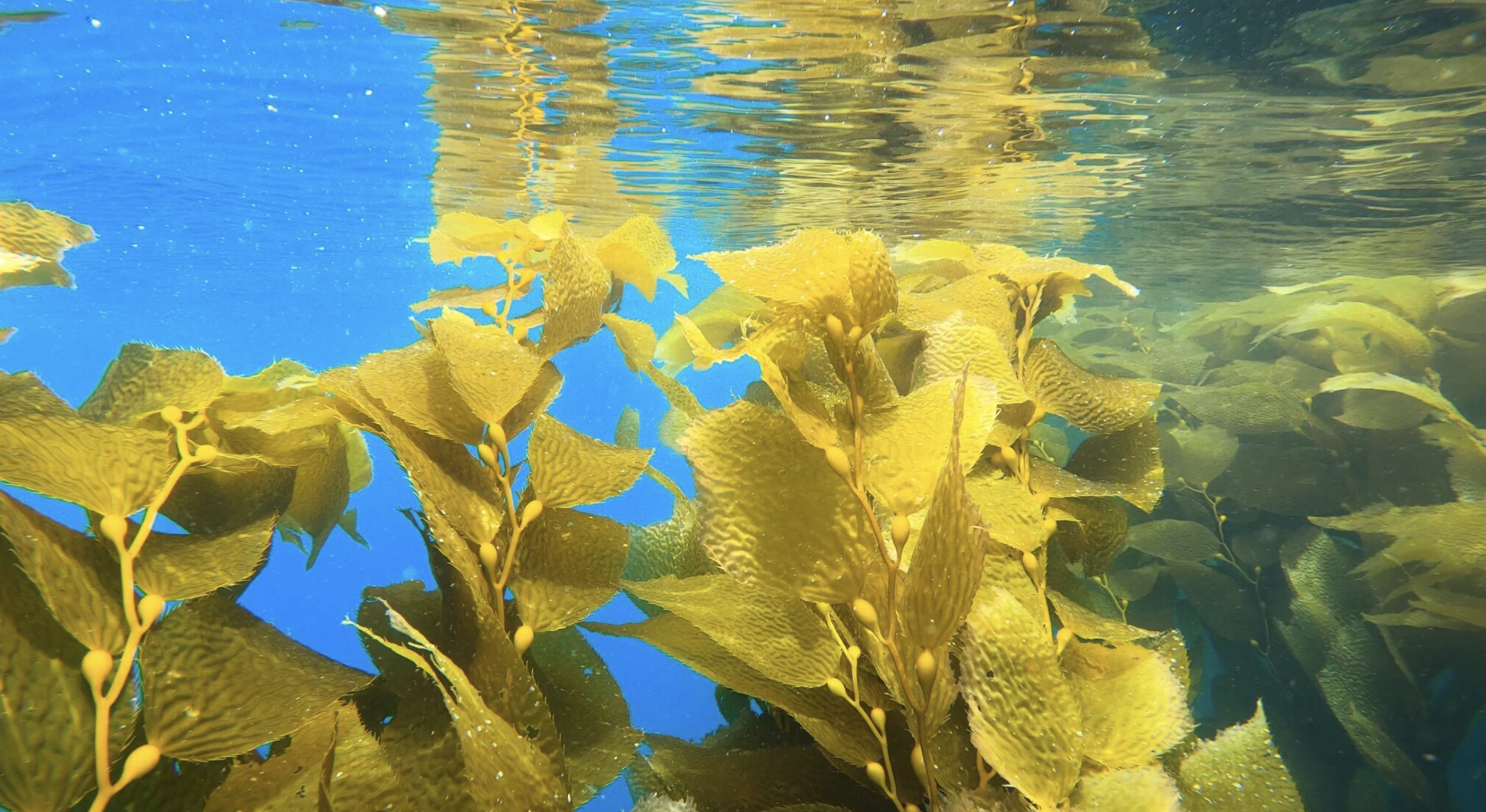
Kelp forests are dynamic ecosystems shaped by the interaction of ocean conditions, physical habitat, and biological communities. At Catalina Island, we are studying how and why kelp forests recover naturally, what conditions support their persistence, and what factors may prevent recovery.
At CIMI's Toyon Bay and Fox Landing study sites, natural kelp recruitment returned in 2023 after approximately nine years without it. This unexpected recovery created an opportunity to observe a natural experiment unfolding underwater. By combining detailed habitat mapping, long-term monitoring, field observations, and targeted experiments, we are investigating the processes that influence kelp recruitment, growth, survival, and persistence.
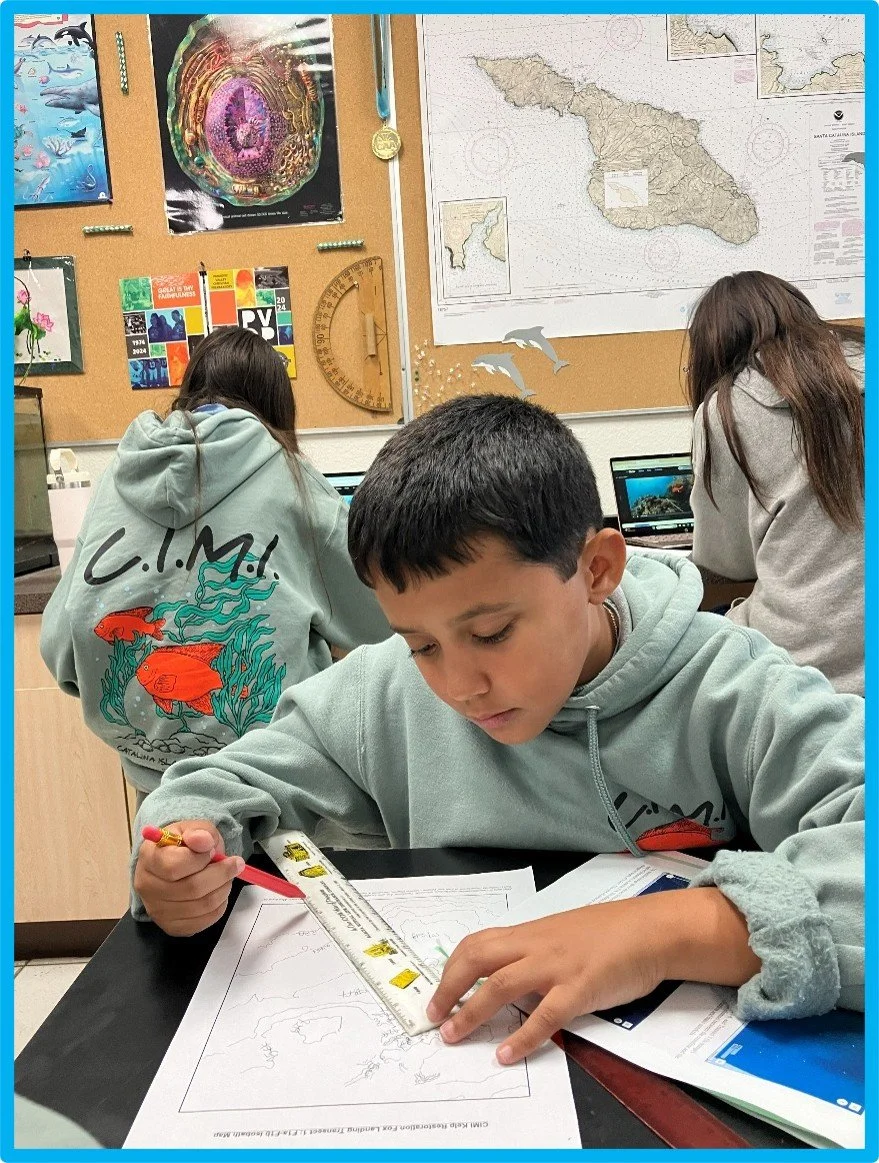
Our goal is to develop practical, science-based guidance for kelp forest conservation and restoration. We also bring this research into CIMI's educational programs, giving thousands of students opportunities to explore marine ecology, work with real scientific data, and contribute to our understanding of kelp forest ecosystems.

Why Kelp Needs Help
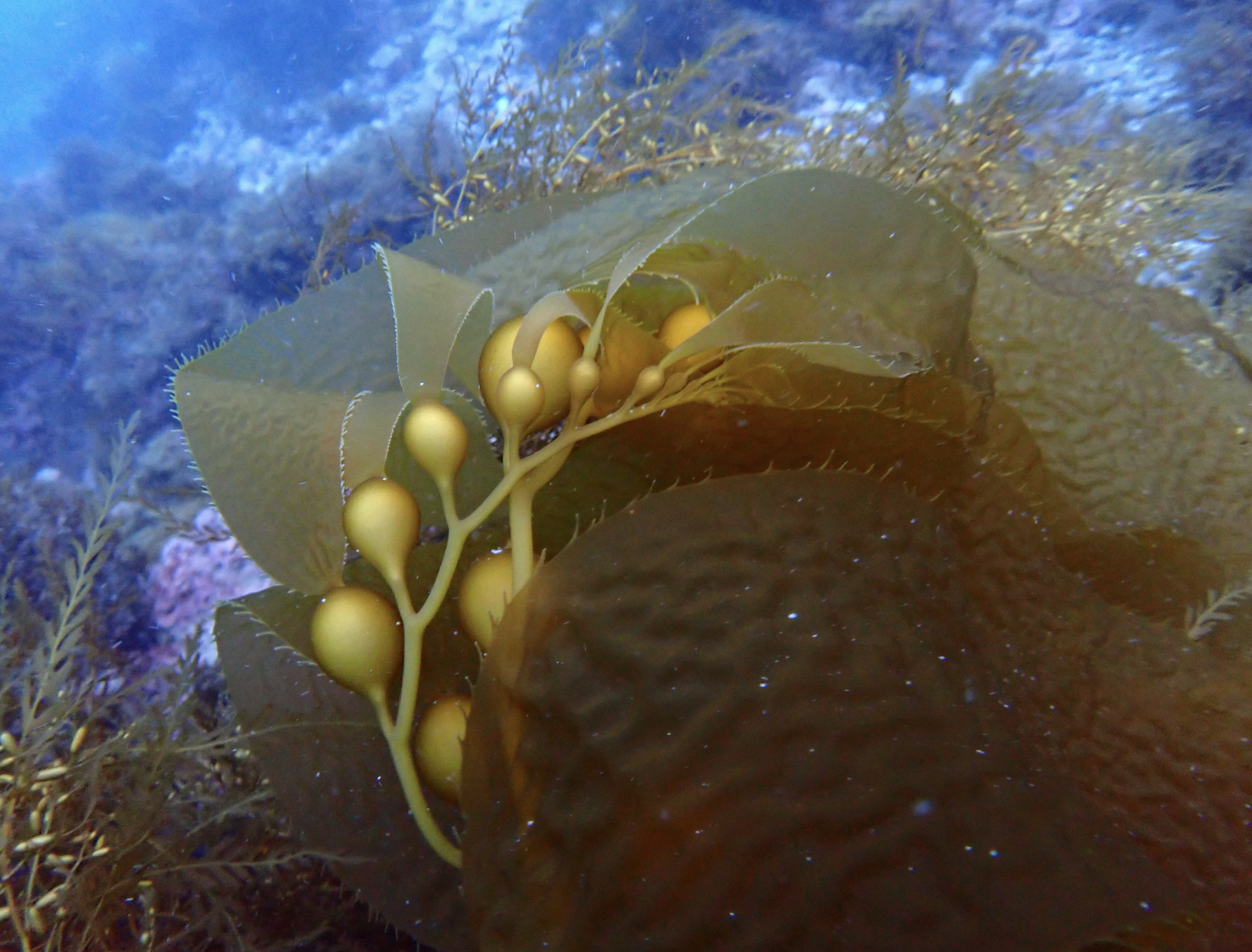
Kelp forests along the California coast have experienced substantial declines associated with marine heatwaves, changing ocean conditions, intense storms, and shifts in marine communities, including the spread of invasive algae. These pressures can interact to affect kelp reproduction, recruitment, survival, and the availability of suitable habitat.
But kelp recovery is not the same everywhere. Even within our Catalina Island study sites, some areas recover more quickly while others remain sparsely populated. Physical features such as depth, substrate, and seafloor relief, together with environmental conditions and competition from other algae, may influence where kelp becomes established and how long it persists.
Understanding these differences is essential. Natural recovery may be sufficient in some places, while other areas may require targeted management or restoration. By identifying the conditions that support recovery, and the factors that limit it, we can help make future conservation and restoration efforts more effective and cost-efficient.

Project Objectives
Objective 1:
Understand Historical Patterns of Kelp Change
We examine historical records and available mapping data to understand how kelp distribution and abundance have changed over time around Catalina Island. This broader perspective helps us place current recovery patterns in context and identify important questions about the future of kelp forests.
Objective 2:
Map & Monitor
Kelp and its Physical Habitat
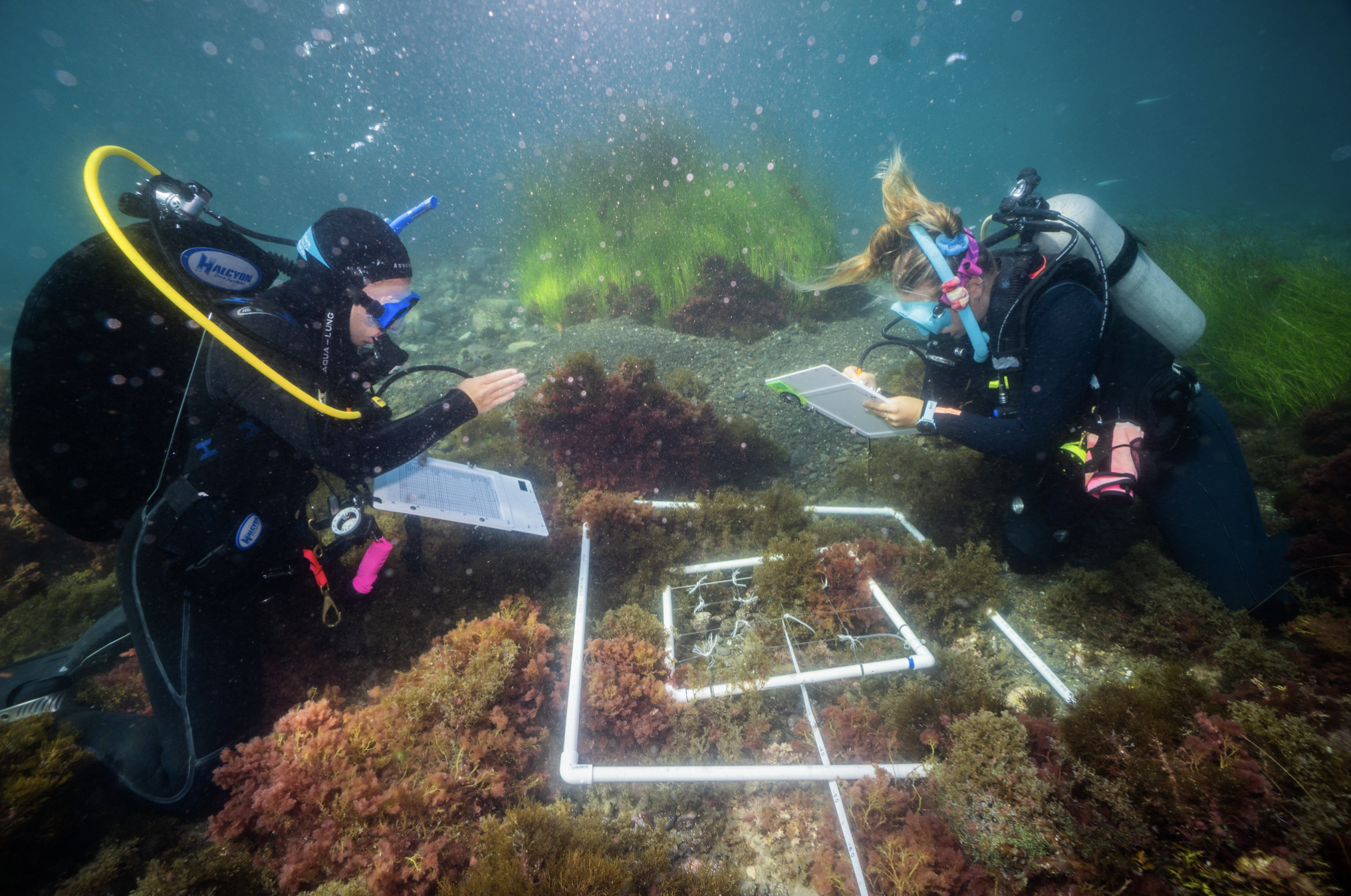
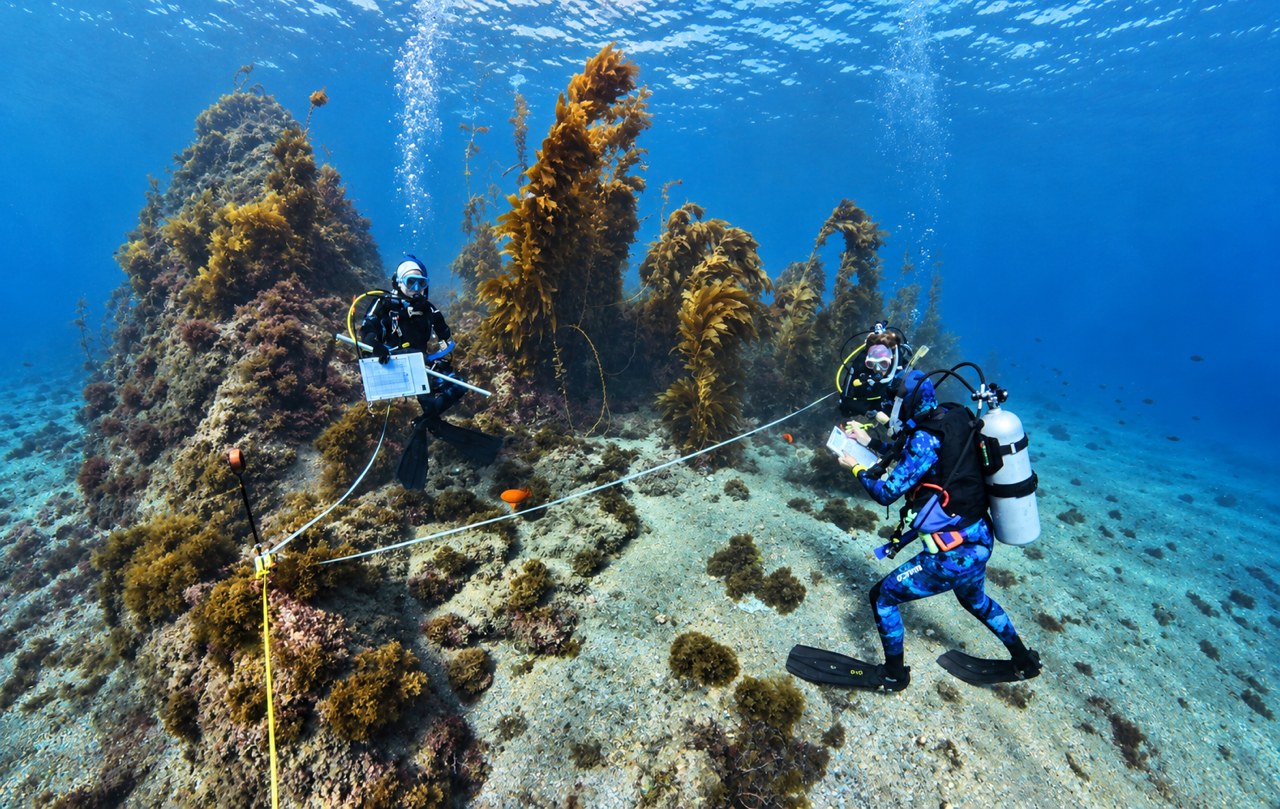
We combine underwater surveys, diver observations, drone imagery, and seafloor mapping to document changes in kelp and the habitats where it grows. We examine depth, substrate, relief, slope, and orientation alongside kelp abundance, size, and distribution.
Detailed mapping helps us see patterns that canopy imagery alone cannot reveal, including what happens beneath the surface before kelp canopies develop and after they disappear. Long-term monitoring allows us to track recruitment, growth, survival, and persistence across seasons and years.
Objective 3:
Investigate What Drives Kelp Recovery and Persistence
We study how environmental conditions and biological interactions influence the kelp life cycle and the development of kelp forests. Our research examines natural recruitment, reproductive condition, juvenile survival, temperature, wave disturbance, substrate characteristics, and competition with other algae, including invasive Sargassum horneri.
By connecting biological observations with physical habitat and environmental data, we aim to understand why kelp thrives in some locations but struggles in others—and what conditions allow recovery to continue.
Objective 4:
Evaluate Strategies for Effective Restoration and Management
Natural recovery does not always occur where or when it is needed. Through targeted experiments and comparisons among study areas, we investigate approaches such as invasive algae removal and the role of substrate conditions in kelp establishment.
Our findings will help identify when natural recovery may be sufficient, where management intervention may be beneficial, and which approaches offer the greatest potential for successful, cost-effective restoration.
Objective 5:
Share What We Learn
We share our findings, maps, and observations with scientists, resource managers, policymakers, educators, students, and the public. Through interactive maps, educational materials, and CIMI's marine science programs, students engage with real research questions and learn how scientists investigate complex environmental changes.
By connecting long-term field research with hands-on education, we aim to build a deeper understanding of kelp forest ecosystems and support informed decisions about their conservation and future.